WhatsApp Business API Guide: Costs, Limits and Access in 2026
The real differences from the free app, how Meta bills per message, and what to check before you migrate your number.
Written by
xcale Team
Equipo xcale · The xcale Team
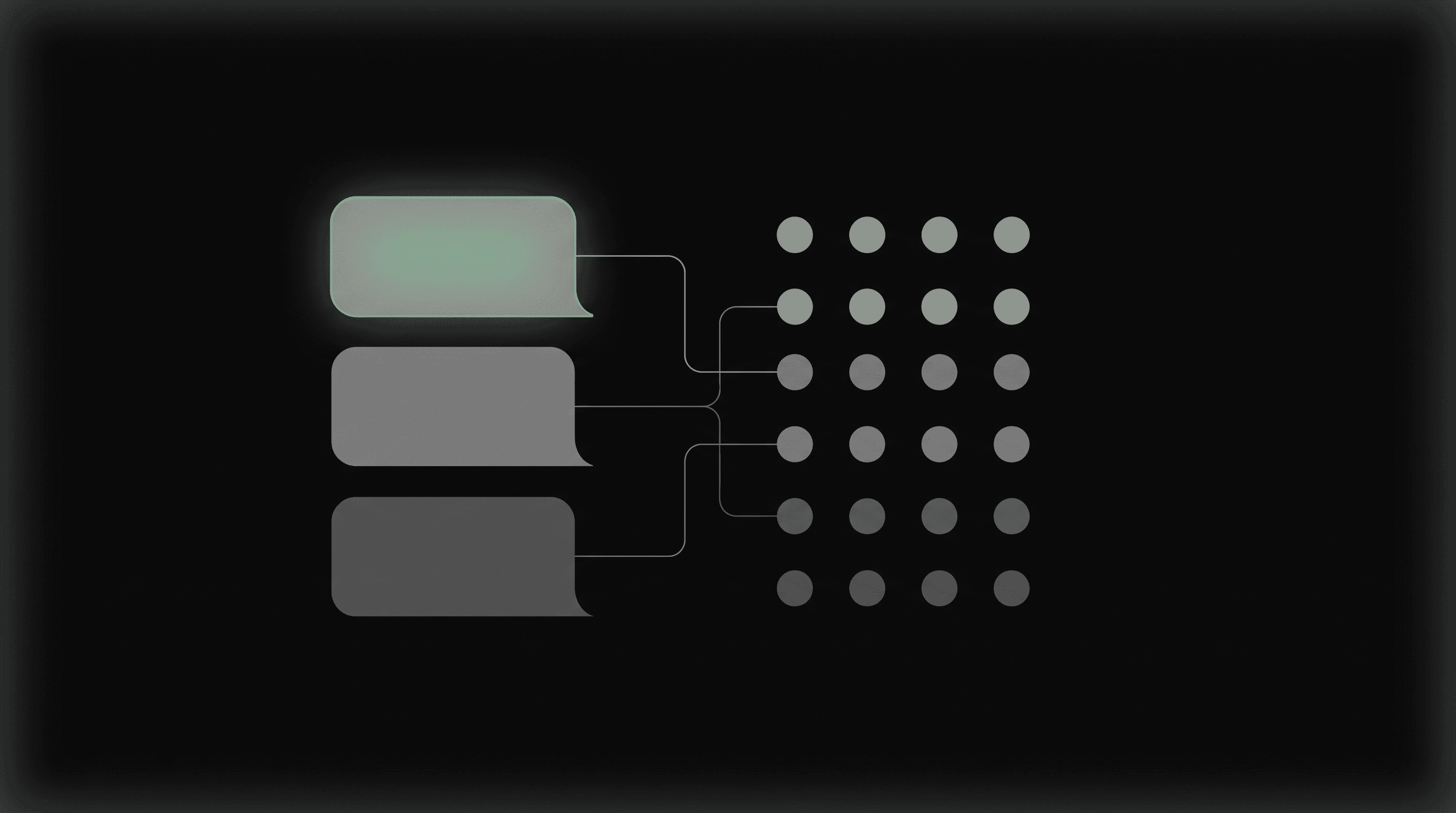
The WhatsApp Business API is not an app you install. It is the door Meta opens so that software — an automation platform, a CRM, your own backend — can send and receive messages on your business number. Everything else follows from that: why several agents can share one number, why you pay per message, why Meta wants your company verified, and why there is nothing to download.
This WhatsApp Business API guide covers the decisions you have to make before you move: how the API really differs from the free Business app, what it unlocks, how Meta's pricing works and what changes in October, the three ways to get access, and the mistakes that stall rollouts for small teams.
What the WhatsApp Business API actually is
xcale
Try xcale free for 7 days
Your agent configured, connected to your stack, and answering on WhatsApp — in hours, not weeks.
The product is officially called the WhatsApp Business Platform, and the API is its interface. It has no inbox, no screen, no notifications — it is a technical channel. Everything your team sees, from the shared inbox and chat assignment to reporting and automation, comes from the software you connect on top of it.
Running it takes three things: a dedicated phone number, a Meta Business account with a WhatsApp Business Account (WABA) attached, and software that speaks to the API. The Cloud API, hosted by Meta, is the standard now, so there is no server to maintain.
And three things it is not: a bulk-messaging loophole, a cheaper version of the app, and a chatbot. The API moves messages. Who answers is your team, or the AI you configure on top.
WhatsApp Business app vs. API: the real differences
The free app is a good product, and plenty of businesses should stay on it. Its ceilings, concretely:
- Devices: one primary phone plus four linked devices. A Meta Verified subscription raises the cap to ten.
- Broadcasts: lists of up to 256 contacts, and only people who saved your number receive them.
- No roles or assignment: everyone with access sees everything, and nobody owns a conversation.
- No real integrations: the catalog is maintained by hand, and the chat can't read your inventory, your calendar or your payment provider.
- History lives on the device: lose the phone or the employee, lose the thread.
The API fixes all five and changes the rules in exchange: message categories, templates Meta has to approve, sending limits tied to a quality rating, and a per-message cost. More power, more governance.
The honest threshold: if one person handles your volume and you don't need the chat wired to your systems, the app wins. Migrating without a specific problem to solve just buys you cost and paperwork.
What the API unlocks
- Automation with context. An AI agent can read your catalog, your prices and your policies and answer from them — that's what we build at xcale.
- Integrations. Checking Shopify stock, booking on your calendar or generating a payment link inside the chat all require the API. Available connections are listed under integrations.
- Approved proactive messages. Order confirmations, appointment reminders, shipping updates: these are templates, and they are the part of WhatsApp the app can't do at scale.
What the WhatsApp Business API costs
Start with the change most guides still get wrong: since 1 July 2025, Meta bills per message, not per 24-hour conversation. And there is a second date: from 1 October 2026 it bills non-template messages too.
By category:
- Marketing (promotions, campaigns): always billed.
- Utility (order updates, reminders, confirmations): billed outside an open customer service window and, from 1 October 2026, inside it as well.
- Authentication (one-time codes): always billed, even inside an open customer service window.
- Service — your free-form replies inside the 24-hour window a customer opens: free until 30 September 2026; billed per message from 1 October, at the recipient country's utility and authentication rate, with no volume tiers.
Two details that reshape a budget: click-to-WhatsApp ads open a 72-hour free entry point window — the one October leaves alone — and utility and authentication rates drop as your monthly volume crosses thresholds Meta sets per market and category.
Rates differ by country, and Meta publishes downloadable rate cards. Check the card for your market before you budget.
Until 30 September 2026, an inbound WhatsApp costs almost nothing in Meta fees. From 1 October, answering is billed too: the question stops being who speaks first and becomes how many messages you spend resolving.
The second cost is the platform running the number. Ours starts at $49/month with a 7-day free trial. And one question worth asking any provider before you sign: are Meta's charges paid with your card on the WABA, or invoiced by the provider? That decides who handles local taxes.
How to get access: Cloud API, BSP or a platform
Three routes, and the choice comes down to who is going to build the software:
- The Cloud API directly. You create the WABA, request access and write everything yourself. No inbox and no automation until you build them. Sensible if you have engineers.
- A BSP (Business Solution Provider). Twilio, 360dialog or Infobip resell access, often with a per-message markup, and you still need software your team can actually work in.
- A full platform. It creates the WABA for you and ships with a shared inbox, automation and integrations from day one. This is the route most small teams take, and it is what we do at xcale.
Three questions before signing, whichever route you take: are the WABA and the number registered to your company (if they sit under the provider, switching tools later hurts), can you export your conversations and contacts, and who pays Meta.
Verification, display name and sending limits
Business verification happens in Meta Business Manager, with legal documents whose registered name matches the account exactly. This is where most applications stall — a trade name on the account and a different legal name on the tax document. Fix the name before you apply, not after the rejection.
Display name is reviewed by Meta and has to correspond to the business. The green badge (Official Business Account) is separate: you can't buy it or request it during setup. Meta grants it on brand notability.
Sending limits start at 250 new recipients per rolling 24 hours and climb through 2,000, 10,000, 100,000 and unlimited. You move up by keeping message quality high and using at least half your current limit within seven days; Meta re-evaluates every few hours. Verifying your business is one of the paths off the first tier. Note what it counts: conversations you start; replying to people who message you doesn't consume it.
What are the WhatsApp Business API's limitations?
The WhatsApp Business API's limitations come in three shapes — rate, size and delivery — and none of them show up in a demo. They show up when volume does. What Meta documents:
- Throughput: 80 messages per second per business phone number, with capacity upgrades available. A number running in coexistence is fixed at 20.
- Per-contact frequency: one message every 6 seconds to the same user — roughly 10 a minute, 600 an hour. Bursts of up to 45 messages in 6 seconds are allowed, but eat into future quota.
- Management calls: 200 requests per hour, per app, per WABA, rising to 5,000 once the account is active with registered numbers. Bulk-syncing a catalog or a contact list hits this ceiling before it hits the message one.
- Media: images up to 5 MB; audio and video up to 16 MB; documents up to 100 MB; stickers 100 KB, or 500 KB animated. Going over returns error 131052.
- What simply isn't there: groups, status, broadcast lists, catalogs and orders are not part of the Cloud API.
High availability: the fragile end is yours, not Meta's. Meta hosts the Cloud API, so nothing of yours has to stay up on the sending side. The risk sits at the other end, on the webhooks receiving every inbound message. Meta retries a failed notification immediately, then with decreasing frequency over 36 hours; anything unacknowledged after that is dropped. It also batches up to 1,000 events per delivery, guaranteeing neither the batching nor the order, so the receiver has to deduplicate. The question for your provider: what happens to messages that arrive while their system is down?
Migrating from the app to the API without losing your history
Meta documents two ways to bring over a number you already use, and the difference is your chat history.
The classic route: delete and register. You remove the number from the WhatsApp Business app — Settings → Account → Delete my account — and register it on the Cloud API. Meta is blunt: your messaging history is lost, and that number can't be used with the Business app again unless you deregister it. The cutover is short — up to three minutes, with inbound messages queued. Export your chats first; the backup is a file you keep, not something the API can read.
Coexistence: the number lives in both places. Meta also lets a provider connect a Business app number to the Cloud API without removing it. Under coexistence:
- Every contact with a WhatsApp number syncs.
- The last 180 days of chat history syncs if the business approves sharing it; media only from the last 14 days.
- Messages mirror both ways: what your team replies from the phone shows up in the platform, and vice versa.
What it costs you: group chats don't sync, and switching it on disables broadcast lists, disappearing messages, view-once messages and live location in 1:1 chats. You get 24 hours from onboarding to sync the history — miss it and the whole flow has to be redone. It needs Business app version 2.24.17 or later.
The question to ask a provider isn't whether they can migrate your number. It's whether they support coexistence — that decides whether you arrive with six months of context or an empty inbox.
Seven mistakes that stall API rollouts
- Migrating the number without asking about coexistence. You decide it once and there is no undo — ask before you sign, not on migration day.
- Assuming you can message anyone, anytime. Outside the 24-hour window, only approved templates go out. This is the biggest culture shock for a team coming from the app.
- Uploading a contact list and blasting it. No opt-in means blocks, which lower your quality rating and cap your sending limit.
- Miscategorizing templates. Marketing dressed up as utility gets rejected or recategorized, and your cost changes with it.
- Documents that don't match the legal name. Weeks lost in review.
- Never asking who pays Meta. It shows up on the first invoice, not in the sales deck.
- Automating before the answers exist. The API doesn't know your prices or policies. If they aren't written down, your agent has nothing to say. The sales process comes first — we cover it in how to sell on WhatsApp.
When to make the move
Three signals, and one is enough:
- More than one person needs to work the same number.
- You're losing chats after hours or during volume spikes.
- You need the chat to read real inventory, calendars or payments.
If none of them apply, stay on the app and come back when one does.
If one does, the real decision isn't the API — it's what you connect on top of it. We build AI agents with persistent memory that remember a customer across conversations, answer from your catalog, and hand off when there's an exception or a negotiation. At Dra. Duarte Medicina Estética, a clinic running this way, 15% of chat conversations end in a booked appointment. Setup takes minutes, not weeks.
Frequently asked questions
It is Meta's official interface (the WhatsApp Business Platform) that lets software send and receive messages on your business WhatsApp number. It is not an app: it has no inbox and no screen of its own. The shared inbox, chat assignment, automation and reporting all come from the platform you connect on top of it.